OTA commission
15 to 20%
Off the top of every intermediated room night, across the network.

You run the operations, the revenue and the marketing for a growing portfolio. The category data says the biggest lever sitting under that portfolio is where the booking gets made, not whether it gets made.
With Rodney Harrex stepping in from SATC and the Auckland and Mantra Adelaide Central additions landing, you are scaling the network at exactly the moment the direct-versus-OTA maths matters most.
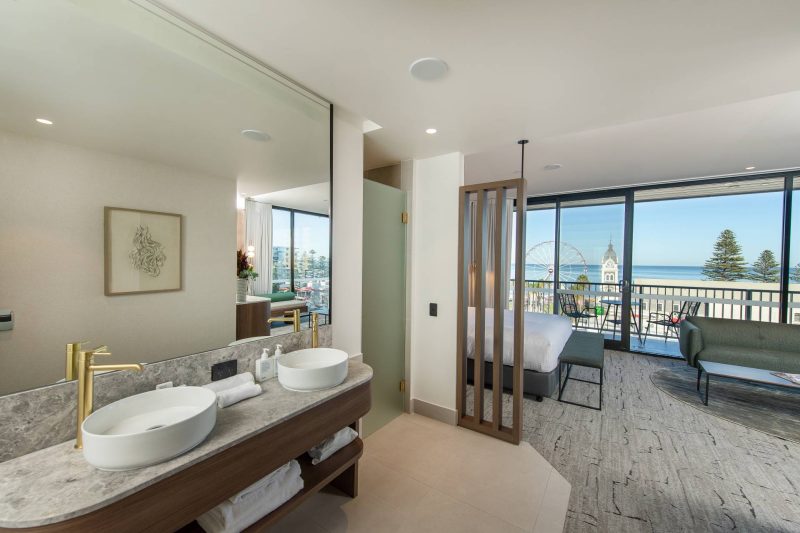
In the category dataset, OTAs and booking platforms poured $126M into advertising, while the entire Hotels and Resorts bucket spent just $25M (Nielsen Ad Intel, as at Dec 2025). That gap is not a coincidence. It is Booking.com, WebJet and TripADeal buying the demand for your properties, then renting it back to you at 15 to 20 points of commission.
For a white-label manager running a network, that is not one hotel's problem. It is the same margin leak repeated across every property under the 1834 banner.
Airlines, tour operators, tourism boards and OTAs all outspend the people who actually own the rooms. The category is loud everywhere except the place with the highest margin at stake.
Hotels and Resorts is the smallest slice of a $677M market. · Source: Nielsen Ad Intel, as at Dec 2025
These are the platforms competing for the searcher who is already deciding to stay at one of your properties. Every one of these dollars is spent to sit between your hotel and the traveller.
Our read: this is intermediation spend, not destination-building spend. · Source: Nielsen Ad Intel, as at Dec 2025
If you can tell us the share of your network's room nights that currently come through OTAs, we can size the reclaim in one call.
Just hit replyNewspapers took $208M of travel and tourism spend, the single biggest channel, ahead of Digital and Social at $193M and Television at $146M. For a portfolio that lives or dies on bookings you can attribute, that mix is a gift. The demand your competitors buy in print, you can capture in the channels where the conversion is measurable and the cost per booking is knowable.
Legacy channels still dominate a category built for performance. · Source: Nielsen Ad Intel, as at Dec 2025
Booking.com routinely buys ads against your own hotel names. If you are not defending those terms, you are paying commission to win a guest who already typed your property in.
A large share of leisure bookings finalise after 7pm on the guest's phone, after they have compared rates on an OTA. Meta retargeting in that window converts the wavering direct booker.
Parity clauses stop you undercutting on price, not on value. Free breakfast, late checkout or a room upgrade offered only on the direct channel moves the booking without breaching the OTA contract.
A single manager running many properties can pool first-party data and creative across the network, so a guest who leaves Cradle Mountain becomes a warm audience for Kangaroo Island. Independent hotels cannot do this. You can.
The category's stay peak is January, but the search and spend peak runs earlier. The direct campaigns that win the summer are funded in spring, not when the rooms are already filling.
A three-night direct booking is worth far more than a one-night OTA booking, but most accounts bid the same on both. Weighting toward longer stays quietly lifts the return without lifting the budget.
Lock down the branded search on all managed hotels so the OTA cannot intercept a guest who is already looking for you. This is the cheapest booking you will ever buy and often the first one an OTA steals.
Pool booking and enquiry data across the whole portfolio into a single first-party audience, then run cross-property prospecting so the network markets as one brand with many destinations, not many brands shouting alone.
Shift the media weight ahead of the January stay peak so you are capturing intent while it is cheap, rather than bidding against every OTA once the season is already hot.
The point is not our numbers in isolation. It is that a direct booking at these efficiencies keeps a margin an OTA takes as commission. These are our own delivered results across travel and tourism accounts, kept deliberately loose, not a category promise.
Everything above we read from the outside. Plugged into your booking data, PMS and channel manager, the direct-versus-OTA picture goes from directional to exact.
We've done this for travel & tourism brands right across Australia. See the campaigns, and the results, for yourself.
Check out our success storiesThe working is simple and yours to check. For every $10M of room revenue currently booked through OTAs at roughly 15% commission, about $1.5M leaves the network each year. Move even a third of those nights to direct and you keep half a million dollars, at direct-campaign efficiencies that cost a fraction of the commission.
Bring your OTA mix and we will map, live, what a network-wide direct engine is worth across the portfolio. No pitch deck.
Just hit replyWe size the commission leaving the network and the share that is realistically winnable direct.
A quick check of which of your properties an OTA is currently intercepting on search.
How we would phase spend ahead of the January peak across the portfolio.